

Exam Strategy
What to Do in the Last Ten Minutes of an Exam
A calm finishing routine for checking missing answers, easy marks, and instructions without trying to rewrite the whole paper.
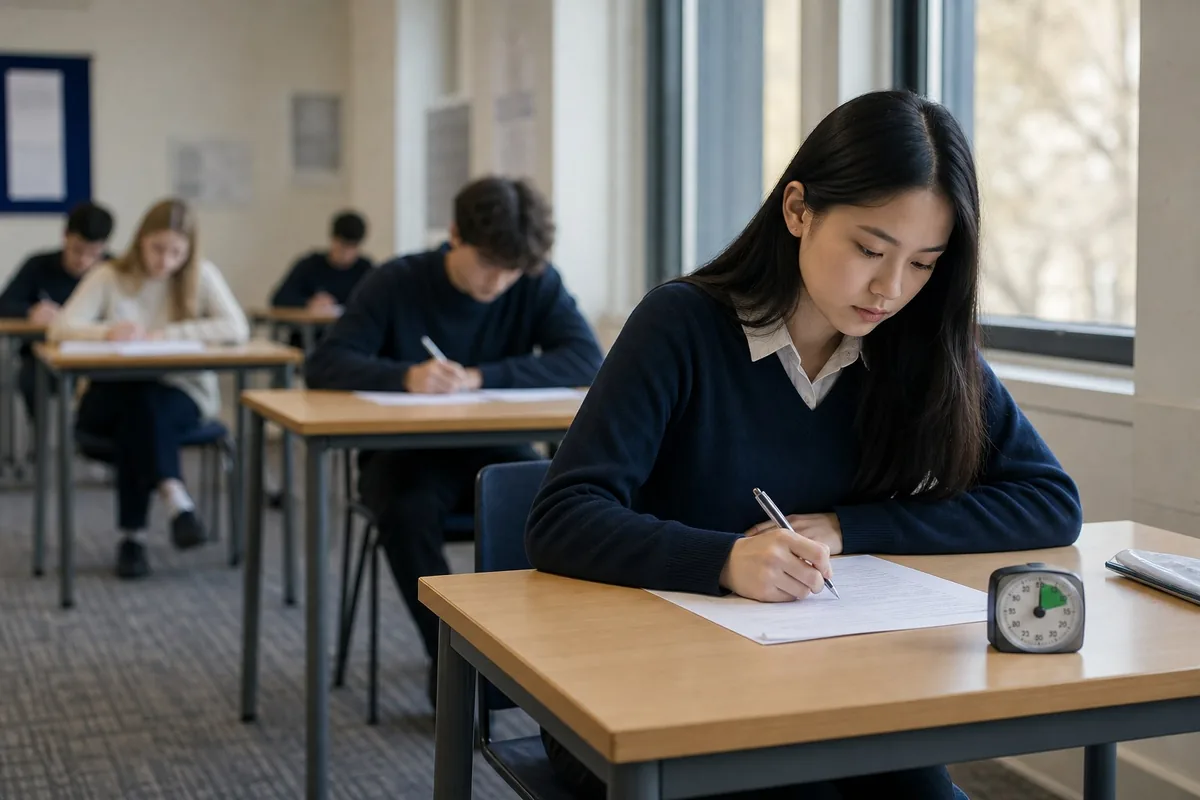
The final ten minutes can disappear in a rush of second guessing. A simple plan helps you use them for marks you can still recover.
First, find the gaps
Scan the paper from front to back. Check that you answered every part you intended to answer, including small subquestions hidden beneath a long prompt. If a question is blank, write the method, relevant fact, or a labelled diagram you can support. A partial answer can be more useful than a perfect answer left unwritten.
Then check the easy-to-lose marks
Look for units in calculations, signs in algebra, labels on graphs, and the number of examples the question asked for. In writing-heavy subjects, make sure your final point actually addresses the command word: explain, compare, evaluate, or justify. You are checking the answer you wrote against the question you were asked.
Change an answer only for a reason
Do not replace an answer merely because you feel nervous. Change it when you can point to a mistake: a calculation that fails a quick check, a misread instruction, or evidence you overlooked. If you are unsure, annotate your reasoning rather than wiping out a valid method.
Practise this routine during timed papers. It becomes much easier to stay calm when “final check” has a sequence you already know.